













2.30AM: Is Your Building Ready? Managing residential buildings when crisis comes calling
by: BTM - Thu, 03 Sep 2026

Real Estate and Property Management are at the core of Bill Grieve’s experience, and in this article he offers his latest thoughts.
In times of peace, prepare for war. Crisis management does not begin when disaster strikes. It begins months - sometimes years - beforehand, in the routine disciplines of maintenance, preparation, communication and enforcement.
At approximately 2.30am on July 14, the residential building in which I live was subjected to an extraordinary external event.
Windows and doors were blown in. Apartments filled with broken glass and debris. Residents emerged frightened and disorientated, some injured, others elderly or with limited mobility.
Emergency services responded.
But the incident revealed something else: how prepared - or unprepared - an ordinary residential building can be when the extraordinary happens.
This is not about attributing blame for an extraordinary event. It is about examining the ordinary things buildings can control before, during and after one.
PREPARE:
The Crisis Starts Before the Crisis
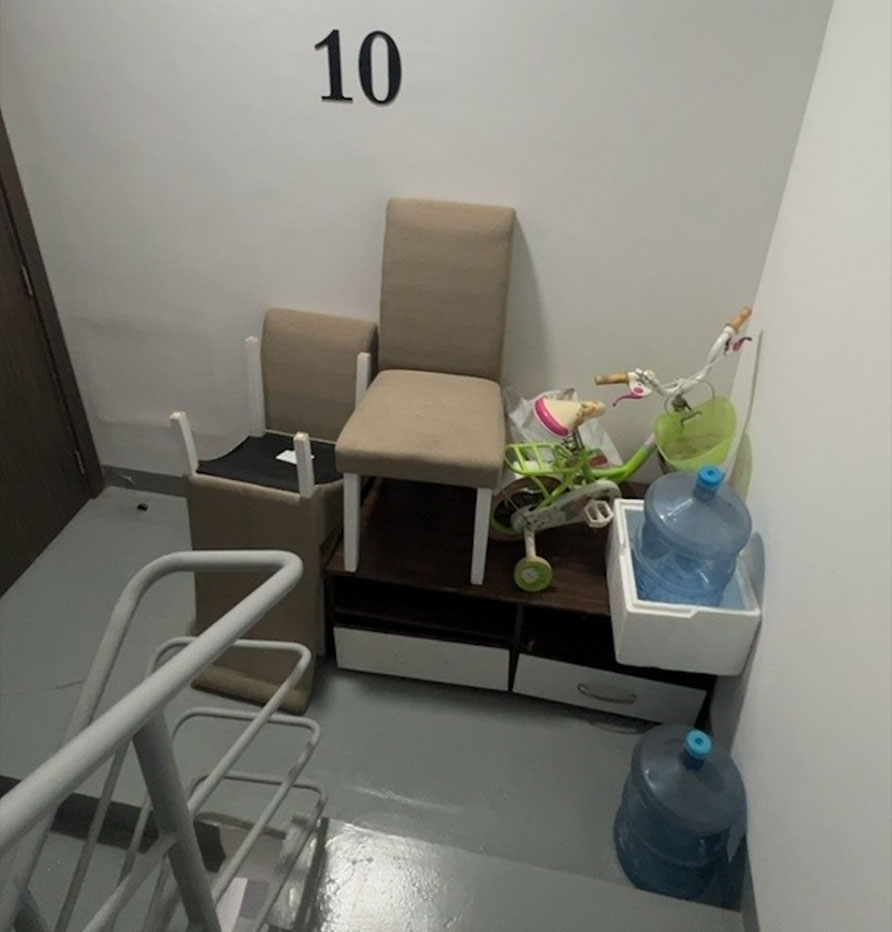
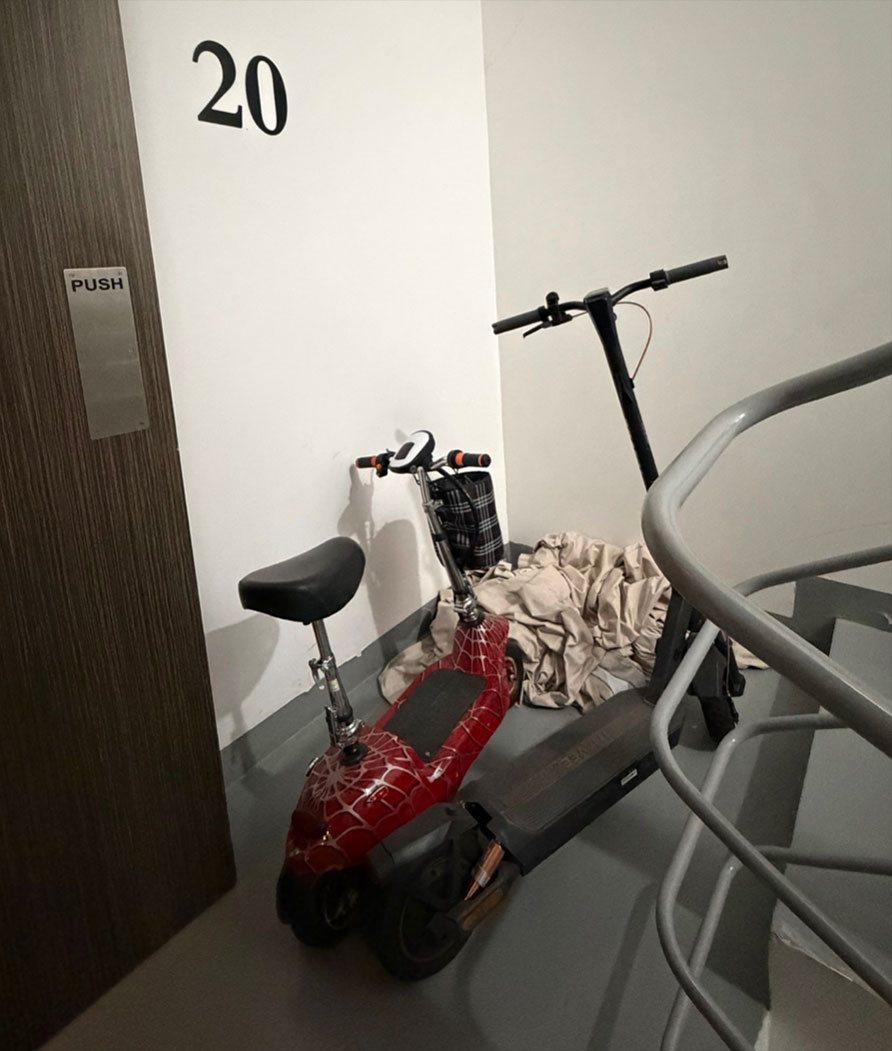
One emergency staircase had no functioning lighting. The other had scooters, toys, furniture, empty 20 Lt water bottles and personal belongings in areas intended to provide a route to safety. And yes, people were seen stumbling over the obstructions.
These were not issues identified for the first time that night. Concerns about escape-route obstructions and lighting had been raised many times previously, including during a recorded building walkthrough.
Yet when the emergency arrived, the deficiencies remained.
By approximately 2pm that day, the obstructions had been removed, and work was underway on the deficient lighting.
There is an important lesson in that contrast.
If a safety deficiency can be addressed rapidly following an emergency, it deserves the same urgency before one.
Procrastination may be the thief of time, but in building management, postponement can steal considerably more. A maintenance problem deferred today may become an operational problem tomorrow - and potentially a safety problem during an emergency.
A crisis should accelerate necessary action. It should never be the event required to make necessary action happen.
IMPACT:
When Theory Meets Reality
Emergency procedures look very different at 2.30am.
Does the alarm work reliably? Are escape routes genuinely clear? Where are emergency keys? Is there an accurate key register? Who controls access? Which residents may require assistance? Who takes command?
During our incident, access was required to apartments affected by smoke and fire concerns or damage. Locating keys proved difficult. Access arrangements presented further challenges, while an already problematic fire-alarm system was sounding during a genuine emergency.
Repeated almost daily false and occupant activated alarms had created complacency. Residents need confidence that when an alarm sounds, it deserves their attention.
Emergencies rarely create everyday management weaknesses. They reveal weaknesses that ordinary days allowed us to ignore.
PEOPLE:
Buildings Contain Humans, Not Apartment Numbers
Emergency planning cannot assume everybody is young, mobile and calm.
Residential communities include children, elderly people, residents with limited mobility and others who may require assistance.
Imagine being awakened by an explosion. Your windows have disappeared. Glass covers the floor. Alarms are sounding. Normal access is disrupted and the emergency staircase suddenly becomes your principal route to safety.
That is when preparedness is tested.
At 2.30am, there is no time left to prepare.
COMMAND AND COMMUNICATE
Who coordinates the response? Who liaises with emergency services? Who checks vulnerable residents? Who controls emergency access? Who documents damage? Who contacts insurers? Who communicates with residents?
If these responsibilities have not been established beforehand, people are forced to improvise afterwards.
Improvisation is not an emergency-management plan.
Communication matters equally. Immediately following our incident, residents were advised that regular updates would be provided. In practice, sustained information subsequently proved difficult.
Never promise a communication cycle that cannot be maintained. Even “There is presently no material change; the next update will follow at 07.00” provides reassurance that somebody remains engaged.
RECOVER:
The Emergency Does Not End at Sunrise
Recovery demands discipline.
A major incident needs a live Master Damage Register covering affected apartments and common areas, photographs, assessments, authority inspections, insurance status, temporary works and repair progress.
Weeks after our incident, some information still required verification. In one instance, an owner associated with a unit recorded as not yet assessed proved readily contactable when approached directly.
The wider lesson is simple:
Bad information creates bad decisions.
When insurance, repairs, owners’ funds and potential Government assistance may depend upon it, accurate information is not clerical paperwork.
It is recovery infrastructure.
NAVIGATE:
Do We Know the Pathway?
Preparedness does not end at the building entrance.
Do the Owners Association, Board and professional association manager understand the respective roles of Civil Defence, the Ministry of Interior, RERA, municipalities, utilities, insurers and other relevant authorities?
More importantly, do they know who to contact, what is required and in what sequence?
During an emergency is the wrong time to discover which authority does what, where damage should be reported, what documentation is required or how Government assistance may be accessed where applicable.
Perhaps Bahrain’s jointly owned property sector would benefit from an easily accessible Owners Association Emergency Recovery Pathway identifying the relevant authorities, their roles, contact points, required documentation and sequence to follow.
The important questions are practical: Do OAs know where to find this information? Do professional association managers understand it? Is it current? And can it be accessed immediately after an emergency?
Preparedness is not simply knowing how to get people out.
It is knowing where to go, who to call and what to do next.
LEARN: Close the Loop
Every serious incident should conclude with a lessons-learned review.
What worked? What failed? What concerns had already been identified? What remained outstanding? What changed afterwards - and who verified completion?
Because there is an important distinction between something being done and something being completed.

A problem is not completed because an email was acknowledged. A repair is not completed because somebody attended. An instruction is not completed because it appears on a spreadsheet.
It is completed when the required outcome has been achieved, checked and closed.
Good management closes the loop.
Clear the staircase. Test the lights. Maintain the alarm. Control the keys. Know who may need assistance. Prepare communications. Know the authorities. Understand their roles. Map the recovery pathway before you need it.
Then check everything again.
A crisis does not wait for a building to become ready. It exposes whether the necessary preparation was already in place.
Standards are promises made visible. In a crisis, some of those promises are promises of safety.
Tags #btm september 2026 #property emergency planning #joint property bahrain #building crisis management #fire safety bahrain #owners association bahrain #residential building safety #emergency preparedness bahrain #building safety bahrain #property management bahrain
Digital Edition
Bahrain This Month
October 2026
Related Articles

A Bigger Football Stage
Mon, 05 Oct 2026

Mindful Money Matters - The Many Values of Money
Mon, 05 Oct 2026

Making Money Make Sense
Mon, 05 Oct 2026
