











Life Is Suffering: 34 Facts - Abdulrahman Al Lily
by: BTM - Sat, 06 Sep 2025
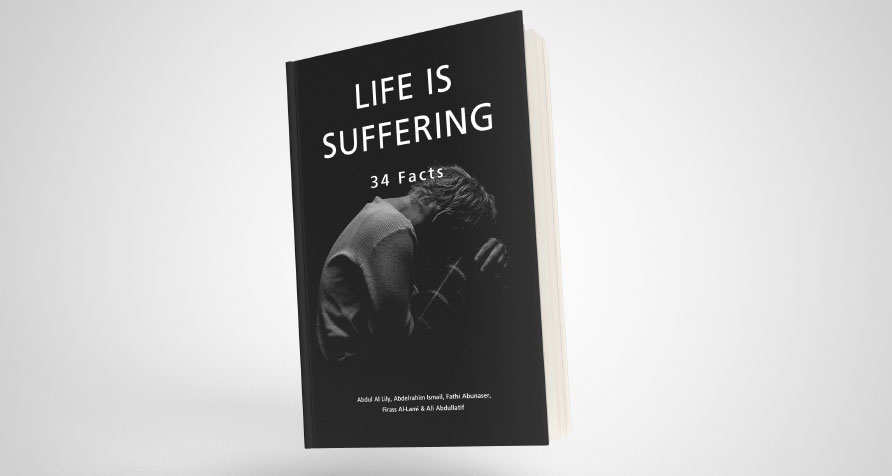
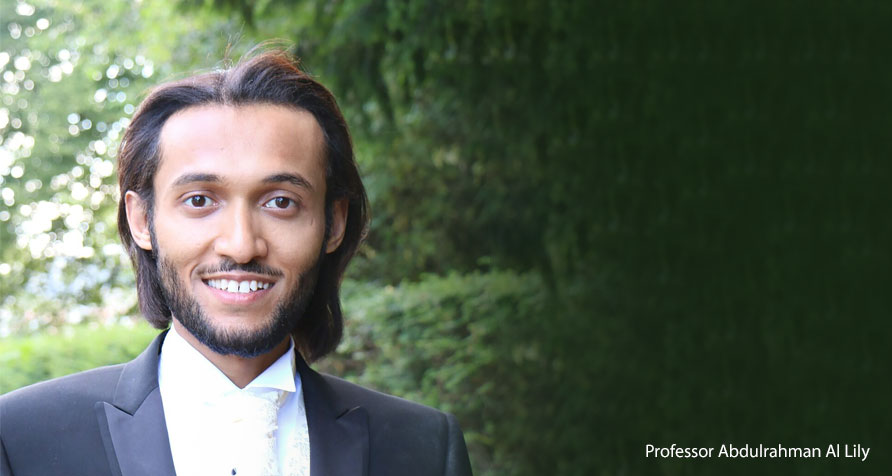
In his thought-provoking new book Life Is Suffering: 34 Facts, Professor Abdulrahman Al Lily takes readers on a deeply unsettling exploration of the darker realities of human existence.
Drawn from three years of research, reflection and over 1,600 interviews conducted across diverse cultures and backgrounds, the book distinguishes itself as a bold and unflinching study of life’s complexities, grounded in psychological, social and cultural realities.
Professor Al Lily, could you tell us a little about yourself and how this book came to be?
I am an Oxford graduate and Saudi academic, and my career has led me to be a bestselling author and vice president of King Faisal University. My research has produced four theories and three conceptual frameworks, with publications in leading journals and translations into seven languages.
Life Is Suffering: 34 Facts challenges readers to abandon comforting illusions and instead confront suffering as a universal human experience, one that transcends time, geography and culture.
I (and colleagues) decided to enquire into ‘darkness’. It began as an attempt to write an article that documented how people see life as suffering. We started interviewing people, expecting a lack of cooperation, but instead, we found that people were eager to discuss this subject. Their enthusiasm and depth of thought encouraged us to expand the project beyond an article into a full book.
What inspired you to write this book?
Modern society is obsessed with positivity; favouring happy endings, quick fixes and uplifting narratives. This emphasis has encouraged people to overlook or dismiss negativity, including the possibility that life itself may be suffering. This book is our response to this imbalance. By examining life as suffering, this book challenges the widespread tendency to ignore or suppress it.
What are the central themes of your book, and why explore these aspects of human experience?
When people hear the phrase ‘life is suffering’, they normally see it as a spiritual statement. Over time, both literature and popular thought have downgraded this idea, reducing it to a purely spiritual notion while overlooking its deeper psychological, social, and cultural dimensions. This book aims to restore that missing awareness, showing that suffering is not just a theological matter but a fundamental aspect of human existence that deserves rigorous exploration and documentation.
Why do you think the book has resonated so strongly with readers?
Although one might assume that modern readers would shy away from a book about suffering, this book has proved otherwise. Upon release, it became a number-one bestseller and number-one hot release on Amazon’s lists, demonstrating an undeniable interest in the subject.
Interestingly, we deliberately challenged readers, making the book’s cover strikingly dark and uninviting, visually reinforcing the gravity of its theme. Yet, instead of deterring readers, this bold approach seemed to draw them in even more.
People are exhausted by the expectation to always be positive. This book gives them permission to acknowledge suffering without needing to ‘fix’ it or frame it as a path to growth. Instead of repackaging suffering as resilience or transformation, we allow it to exist on its own terms. This approach has liberated many readers. They felt seen.
What challenges did you face during the writing process?
This book consumed us as authors. Writing about suffering was not just an intellectual exercise, it was an emotional and psychological immersion into darkness. The process required us to engage deeply with pain, not only in theory but also in practice, as we listened to people’s raw and unfiltered experiences and thoughts of suffering.
How does this book contribute to the existing literature on suffering?
Unlike most books, we do not impose a narrative where suffering must serve a purpose. Sometimes, suffering is just suffering, and it deserves to be examined on its own terms.
How did your perspective as a Saudi scholar shape your approach to these topics?
This book is not informed by the authors, it is authored by the over 1,600 people we interviewed. Rather than presenting our own views, we listened. The voices in this book are not ours; they belong to the interviewees, who serve as the true informants of what it means to perceive and philosophise about suffering.
By relying entirely on interviews as the source of knowledge, we shifted the role of the author from someone who interprets suffering to someone who documents it as it is lived and understood by others. This book does not claim authority over suffering; it gives a platform to the real ‘authors’, i.e. the 1,600 voices that brought this book to life.
What kinds of people did you interview for the book?
We interviewed all kinds of people across different backgrounds, professions and personalities. If you can think of a type of person, we probably spoke to them. Our goal was to explore suffering from as many angles as possible, without limiting it to a specific demographic or worldview.
We spoke with high-profile individuals navigating lives shaped by power and influence. We interviewed bus drivers, farmers and factory workers, whose daily routines offer completely different perspectives on life. We spoke to comedians, who dedicate their lives to making others laugh, and eternal optimists, who always see the bright side.
We interviewed celebrities, whose experiences are shaped by fame and public scrutiny and monks, who view life through the lens of detachment and inner peace. We even sought out voices rarely heard in discussions on suffering; a lighthouse keeper, a food critic, a professional gambler, a tattoo artist, a private investigator, a linguist and a perfumer. Each conversation added a layer to the collective understanding of existence.
Why do you believe it is important for media and publications to explore the complexities of life as suffering?
I admire Bahrain This Month for its willingness to engage with a perspective that many media outlets shy away from – the view of life as suffering. In a time when mainstream narratives often prioritise positivity, optimism and self-improvement, it takes boldness to explore the darker, more complex dimensions of human existence.
By featuring this discussion, the magazine is not merely reporting on a book but challenging its readers to think critically about a reality that is often ignored. The fact that Bahrain This Month has chosen to engage with this topic demonstrates a commitment to intellectual depth, honest reflection, and fearless enquiry.
Tags #thought-provoking books gcc #amazon bestseller saudi author #philosophy of suffering bahrain #top non-fiction books bahrain #books on human suffering gulf #psychology books bahrain #bestselling books gcc 2025 #abdulrahman al lily bahrain #life is suffering book review #btm september 2025
Digital Edition
Bahrain This Month
October 2026
Related Articles

8 Films, Endless Wonders!
Fri, 04 Sep 2026
A Call for Peace
Sat, 11 Apr 2026

Coming to Cinema - April 2026
Sat, 11 Apr 2026