








The AI Bubble
by: BTM - Mon, 05 Jan 2026
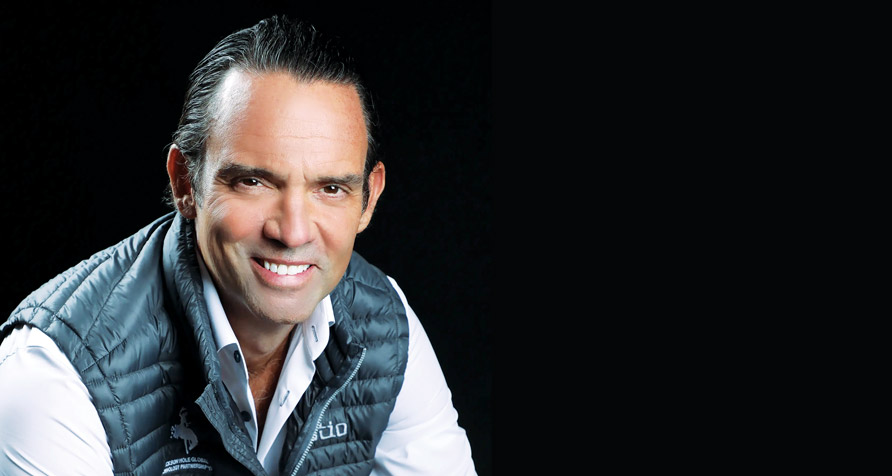
Jack Selby, an early PayPal executive and long-time partner of Peter Thiel, visited Bahrain recently to address members of the Rotary Club of Salmaniya. Drawing on decades at the intersection of technology, finance and media, he offered a pointed warning: an AI bubble may already be forming.
Beginning his speech with a confession that he had not in fact prepared one, he moved easily from Silicon Valley anecdotes to the future of artificial intelligence (AI). Behind the humour sat a serious warning: in his view, an AI bubble may already be forming.
Mr. Selby’s career maps neatly onto three modern manias. First came PayPal, where he joined as one of the original employees in the late 1990s and helped steer the firm through the dot-com crash, a NASDAQ listing and its sale to eBay. That success funded his second act in hedge funds and venture capital, backing companies such as SpaceX and, early on, OpenAI. His third act is film: through his production company he has helped make more than 20 features, most recently Fly Me to the Moon.
The AI Boom
With that background, he sees familiar signs in today’s AI exuberance. Valuations of ‘pure play’ AI firms, he argued, resemble the search-engine frenzy of the late 1990s, when a crowd of hopefuls collapsed and Google emerged as the dominant survivor. The same pattern is likely in AI: billions of dollars have gone into a long list of start-ups, but only a handful of platforms backed by deep pockets – OpenAI, xAI and the big American technology firms – are likely to endure.
The bottleneck, he argues, is not capital but people. World-class AI researchers number in the low thousands, commanding compensation packages that can run into the tens or even hundreds of millions of dollars. Market sentiment, he warns, is already fragile. The reaction to the sudden rise of DeepSeek, a Chinese model that briefly rattled global technology stocks, proves how sensitive expectations have become.
Legal risk is the second fault line. Deals between OpenAI and chipmakers or cloud providers, he suggested, deserve close scrutiny: are they truly binding agreements or marketing theatre designed to push up share prices and justify complex financial engineering? In America’s litigious climate, he expects securities-fraud lawsuits and further copyright cases to become a ‘when, not if’ feature of the AI sector.
The Gulf Angle
For a Bahrain audience, Mr. Selby’s most pointed message concerned leverage. The Gulf, he noted, possesses two of the three vital inputs for AI at scale: surplus capital and cheap energy. Chips and data centres can be bought; low-cost power cannot. Because global AI now depends on Gulf energy and investment, he argued that countries in the region “should absolutely have a seat at the table” when questions of guardrails, ethics and local large-language models are decided.
Humans Still Matter
On one point, at least, he was reassuring. As a film producer, Mr. Selby doubts that AI will write Oscar-worthy scripts any time soon. It can rank screenplays, speed up routine work and perhaps generate the next Hallmark Christmas movie, but genuine art still needs human judgement. If a screenwriter can be replaced by a chatbot, he joked, they were probably in the wrong line of work already.

Digital Edition
Bahrain This Month
October 2026
Related Articles

A Legacy of Giving
Mon, 05 Oct 2026
A Patient-First Future
Mon, 05 Oct 2026
Bound By Brotherhood
Fri, 04 Sep 2026
Videos


