











An Eye on Real Estate
by: Bill Grieve - Wed, 10 Dec 2025
Real Estate and Property Management are at the core of Bill Grieve’s experience. In this series, he provides insight and opinion from both himself and people of standing in the real estate industry, helping to transfer knowledge and provide a platform for property owners and the wider sector.
In conversation with Hanya Ahmed Sulaiman – Experienced Home Owners Association Member – Amwaj Plaza 1 Board Secretary and Acting Chairman since 2016.
The Cascade of Contempt:
How Non-Compliance Could Be Reshaping Bahrain’s Property Order - and Why Enforcement Matters More Than Ever
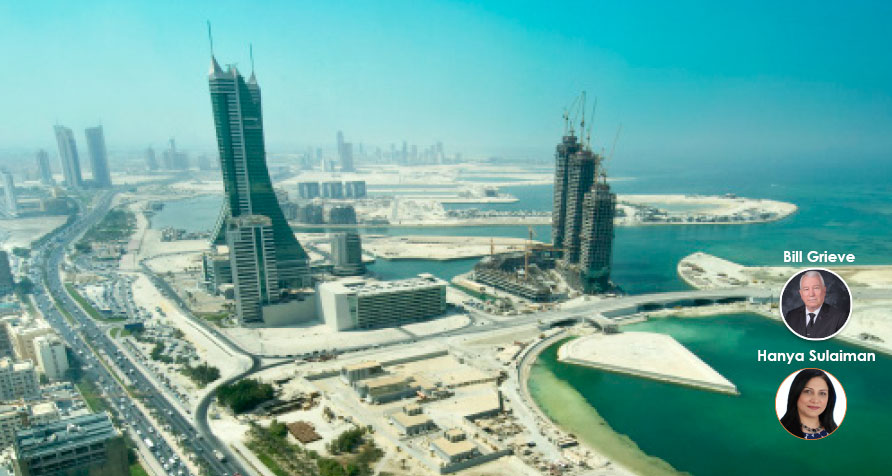
Bahrain’s modern skyline reflects ambition, investment and a long-term commitment to creating communities that match the Kingdom’s economic and social aspirations. Yet behind the polished glass and rising towers lies a concern increasingly discussed among owners, tenants and property managers: a growing culture of relaxed compliance within residential buildings, where rules, bylaws and standards designed to protect shared living environments are too often overlooked.
This challenge is not rooted in shortcomings of existing laws or regulatory frameworks – which are robust and clearly established – but arises from the daily reality that enforcement is difficult, expectations vary, and a multicultural resident base brings competing understandings of communal living. When enforcement is inconsistent or slow, behaviours shift and a gradual decline sets in.
Where the Decline Begins – The erosion typically starts small. A landlord partitions a flat without approval to increase rental income. A resident stores personal items in a corridor “just for a few days.” Tenants quietly begin offering daily rentals in buildings intended strictly for long-term occupancy. Delivery workers roam freely through private floors, and common areas accumulate clutter as personal convenience takes priority over shared standards.
Individually, these acts seem trivial. Together, they create an atmosphere where compliance appears negotiable. Over time, the social, financial and aesthetic value of the building declines – not dramatically, but steadily, almost imperceptibly.
From Overlooking to Normalising Non-Compliance – In many mixed-use and residential towers, the shift begins when convenience outweighs responsibility. Maintenance lapses go unreported. Insurance renewals are delayed. Residents begin assuming that “everyone else does the same,” and so the cycle continues.
When bylaws are applied inconsistently, they lose their influence. Minor infractions become accepted norms, and once norms shift, behaviour escalates. This dynamic is especially evident in large residential towers where people from different countries, cultures, and communal traditions share the same vertical neighbourhood. What one group sees as acceptable – noise levels, use of hallways, rental practices, visitor access – may be deeply unsettling to others.
Without consistent enforcement, misunderstandings multiply. Tensions rise.
And the building’s overall atmosphere transitions from cohesive and cooperative to fragmented and strained with obvious friction and small incidents magnified.
Perception Changes Intentions – Rules Must Feel Real
Bahrain’s laws, building codes and regulatory structures are comprehensive, clear, and designed to protect both residents and investors. But, as in any rapidly growing urban environment, the capacity to enforce these rules in real time is not unlimited. Regulators, authorities and registration bodies each work within established mandates, procedures and operational constraints.
Their systems function best when supported by proactive behaviour from owners, residents, and management committees.
Yet when people see repeated breaches without visible consequence, a psychological shift occurs, rules begin to feel optional. Compliance becomes a matter of personal preference rather than civic responsibility.
This perception – far more than any policy gap – is what fuels broader disregard. Owners who invest in proper management feel penalised. Long-term tenants become frustrated. Investors question the long-term stability of buildings where rules appear selectively applied. Trust in the system can erode, even though the system itself remains sound.
The Ripple Effect on Communities and Value – The effects of lax enforcement reach well beyond inconvenience. Unregulated short-term rentals, unauthorised structural alterations and unmanaged common areas place additional burden on building infrastructure, increase safety risks and accelerate wear and tear. Transient tenants disrupt the rhythm of buildings intended for stable residency. Noise, misuse of common spaces, and differing expectations of privacy become common complaints.
In multicultural towers – which make up much of Bahrain’s residential landscape – these issues become more pronounced. What is acceptable to one group may be viewed as disrespectful by another, heightening communal friction. Without a trusted authority to manage and enforce standards, tensions escalate and buildings lose both harmony and market value. Rules must apply to all – and be enforced.
Municipalities as Key Partners in Upholding Standards – Bahrain’s municipalities have long played a crucial, legally grounded role in shaping urban development, maintaining safety standards and safeguarding the quality of shared spaces. As residential towers grow in number and density, their role becomes even more important.
Municipalities are uniquely positioned – geographically, administratively and functionally – to reinforce compliance across residential buildings. Their responsibilities traditionally include building inspections, monitoring safety conditions, reviewing structural modifications and ensuring zoning compliance.
However, they can also serve as the front-line partner in preventing the slow decline caused by unmanaged non-compliance.
A Quick-Response Municipal Mechanism – A dedicated managed municipal reporting and response system – with easily accessible channels for complaints, photographs and tip-offs would significantly strengthen oversight. Such a mechanism could:
• Provide clear, structured ways for residents and owners’ associations to request enforcement support
• Allow municipalities to identify problem buildings early
• Enable swift interventions before small issues escalate
• Reinforce trust between communities and municipal authorities
• Create a visible feedback loop that demonstrates action and discourages future violations
This does not require large new structures or budgets. In fact, many global cities have proven that responsive municipal enforcement units often become self-funding.
Penalties, inspection fees, fines for repeat violations and charges for unauthorised changes can be reinvested into enforcement operations. Over time, this creates a sustainable ‘compliance ecosystem’ where municipalities maintain high standards without drawing heavily on public funds.
Why Municipal Enforcement Matters – Municipalities occupy a central and neutral role: they are not owners, not managers, not tenants, not insurers – yet their authority underpins all.
Strong, consistent municipal enforcement:
• Ensures buildings meet safety and fire standards
• Protects property values
• Supports tourism and investor confidence
• Reduces community conflict
• Enhances neighbourhood identity and aesthetics
• Reinforces respect for laws and bylaws at all levels
In every successful real estate market worldwide, municipalities are key guardians of building standards. Bahrain is no exception – and empowering its municipalities further would create long-term benefits across every residential district.

Insurance as a Compliance Partner – Insurance companies continue to represent an underused but potentially transformative partner in improving compliance. By linking coverage to adherence with bylaws and building regulations, insurers can help ensure that unsafe or unlawful practices carry real financial consequence and create oversight on building managers to enforce bylaws.
This does not replace municipal enforcement but complements it. When regulators, municipalities, insurers, and owners’ associations all reinforce the same standard, compliance becomes the path of least resistance – not the exception.
Building a Culture of Shared Responsibility – Sustainable compliance requires a collective approach built on consistency, clarity and cooperation. Regulators set the framework. Municipalities uphold day-to-day standards. Owners’ associations and building committees guide communities. Insurers reinforce financial responsibility. And residents participate by respecting rules that protect everyone.
The Moral of Enforcement – A property system is only as strong as the culture that supports it. When enforcement becomes sporadic, non-compliance becomes ordinary. When municipalities, associations and building managers intervene quickly and consistently, the opposite occurs: rules regain meaning, complaints reduce and buildings remain safe, stable, pleasant places to live.
Bahrain’s real estate sector has vast potential, and strengthening enforcement – through municipalities, insurers, management committees and residents – will help unlock that potential. With shared commitment, Bahrain’s skyline will continue to grow not only upward, but stronger ensuring the skyline reflects not just growth, but good governance and community harmony.
Tags #non-compliance buildings bahrain #bahrain real estate governance #residential towers bahrain #property bylaws bahrain #municipal enforcement bahrain #building compliance bahrain #hoa bahrain issues #Bahrain property management #bahrain real estate #btm december 2025
Digital Edition
Bahrain This Month
September 2026
Related Articles

A September Reset
Thu, 03 Sep 2026
Water Worries
Thu, 03 Sep 2026
26 Iconic Moments from the FIFA World Cup 2026
Sun, 02 Aug 2026


