








Building A Nation
by: BTM - Sat, 09 May 2026
Bahrain’s modern identity has been shaped not only by its history, trade and culture, but by the bold projects that have transformed the Kingdom’s physical landscape.
Over recent decades, major developments have connected Bahrain to its neighbours, redefined its skyline, welcomed the world to its shores and pushed the boundaries of what a small island nation can achieve.
From the King Fahd Causeway to the Bahrain International Circuit, Bahrain World Trade Centre and Bahrain Bay, these landmark projects are more than engineering achievements. They are symbols of confidence, ambition and national progress, reflecting a country that has consistently looked outward while investing in its own future.
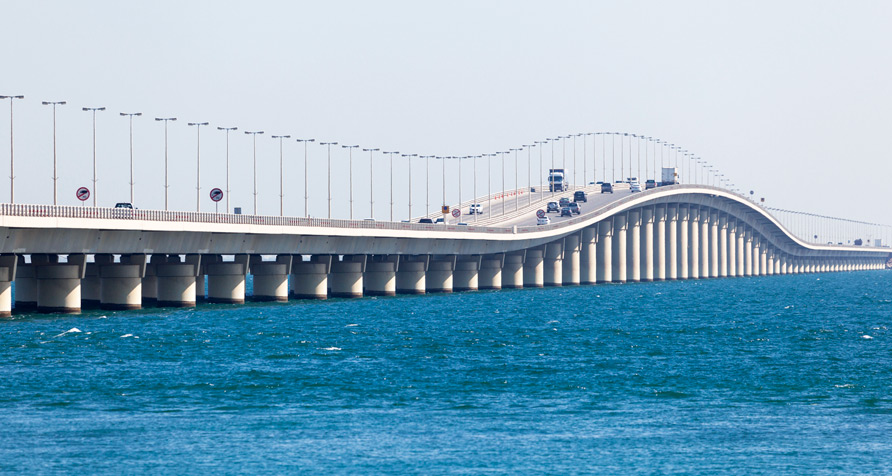
The King Fahd Causeway remains one of the most important infrastructure projects in Bahrain’s modern history. Linking Bahrain with Saudi Arabia, it changed the way people, goods and businesses moved across the region. For residents, it opened a direct route to the Kingdom’s largest neighbour. For business, tourism and logistics, it created a vital corridor that strengthened Bahrain’s role as a regional hub. The causeway also carried a symbolic weight, standing as a physical expression of Gulf cooperation and shared opportunity.
It helped make Bahrain more accessible, particularly for weekend tourism and cross-border trade. Hotels, restaurants, retail outlets, entertainment venues and service providers have all benefited from the flow of visitors it supports. In many ways, the causeway expanded Bahrain’s horizons without changing its size, extending its reach and reinforcing its place within the wider Gulf economy.
Icons Of Ambition
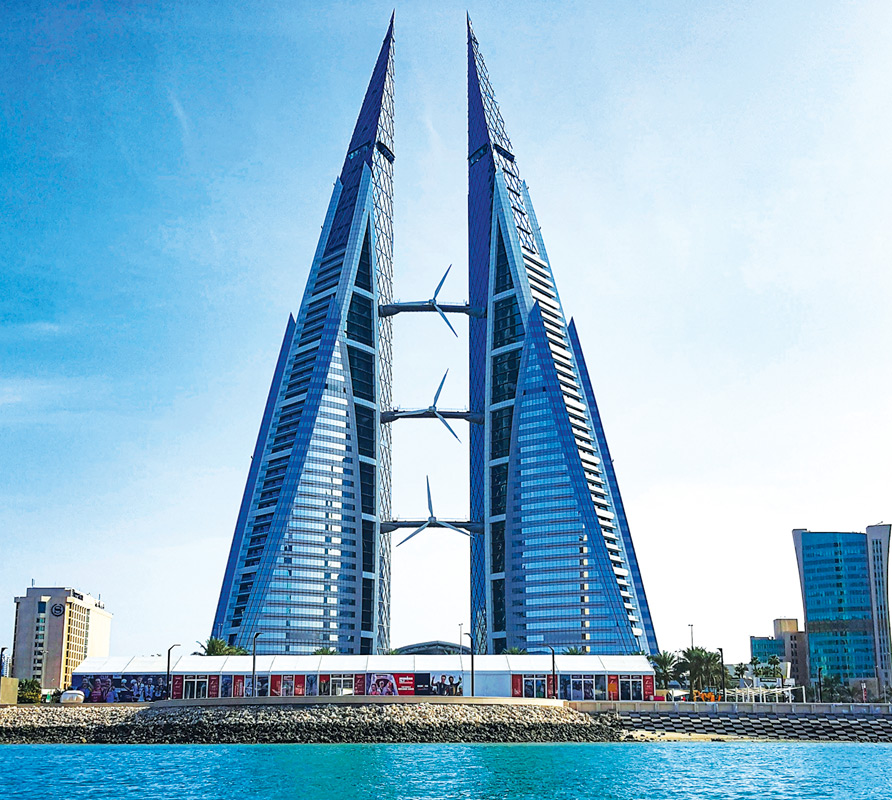
If the causeway strengthened Bahrain’s connections, the Bahrain World Trade Centre reshaped its image. Rising above Manama, the twin towers became one of the Kingdom’s most recognisable architectural landmarks. Their sail-like form reflects Bahrain’s maritime heritage, while their sleek profile speaks to the confidence of a modern financial and commercial centre.
What made the development particularly striking was its integration of wind turbines between the towers, a feature that gave the building global attention and positioned it as a symbol of design ambition. At a time when sustainability was becoming an increasingly important part of architectural discussion, the Bahrain World Trade Centre showed that iconic design could also make a statement about innovation.
The building did more than add height to the skyline. It gave Bahrain a visual shorthand for modernity. For international visitors, investors and residents alike, it became a reminder that the Kingdom was willing to take risks, think creatively and create landmarks with genuine identity.
Bahrain Bay further advanced this transformation. Built around reclaimed waterfront land, the development created a new district that brought together commercial, residential, hospitality and leisure components. It shifted attention towards the waterfront as a place not only for views, but for living, working and gathering.
The project helped redefine expectations for urban development in Bahrain. It showed how master planning could create a destination rather than a single building, with hotels, offices, homes and public spaces contributing to a larger sense of place. Bahrain Bay also strengthened Manama’s position as a contemporary capital, offering a setting for business and lifestyle that matched the aspirations of a growing city.
A Global Stage
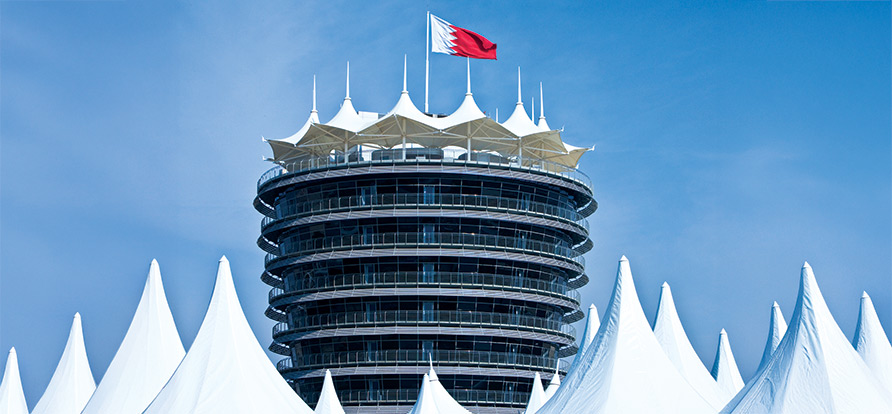
Few projects have changed Bahrain’s international profile as dramatically as the Bahrain International Circuit. When the Kingdom brought Formula 1 to Sakhir, it placed Bahrain on one of the world’s most watched sporting stages and proved that the region could host major global events with professionalism, spectacle and long-term vision.
The circuit helped drive tourism, hospitality and international media attention. It also created opportunities across events, logistics, training, motorsport culture and local business. Over time, the Grand Prix became an annual moment when Bahrain’s name reached audiences across the globe, presenting the Kingdom as energetic, capable and welcoming.
The Bahrain International Circuit also pushed boundaries in a broader sense. It showed that infrastructure could be used to build reputation. It demonstrated that investment in a single world-class venue could have effects far beyond its immediate purpose, supporting national branding, visitor numbers and confidence in Bahrain’s ability to deliver at the highest level.
Together, these projects reveal a consistent theme in Bahrain’s development: the ability to think beyond scale. Bahrain may be geographically compact, but its major real estate and infrastructure achievements have often carried regional or global significance. They have connected economies, expanded urban life, supported tourism, inspired architectural conversation and reshaped how the Kingdom is perceived.
As Bahrain continues to develop, future projects will build on this legacy. The challenge will not simply be to build bigger, but to build smarter, more sustainably and with the same sense of purpose that defined the Kingdom’s most important landmarks. The foundations have already been laid by projects that dared to imagine Bahrain not as limited by its size, but strengthened by its ambition.
Tags #btm may 2026 #building bahrain #bahrain real estate #bahrain development #manama skyline #bahrain infrastructure #bahrain international circuit #bahrain bay #Bahrain World Trade Centre #king fahd causeway #bahrain landmarks
Digital Edition
Bahrain This Month
September 2026
Related Articles
Saudi in Bahrain
Fri, 04 Sep 2026
Hit the Road
Fri, 04 Sep 2026
Beyond the Tourist Trail - Saudi Arabia
Fri, 04 Sep 2026