


Designing Connected Communities
by: BTM - Sun, 07 Jun 2026
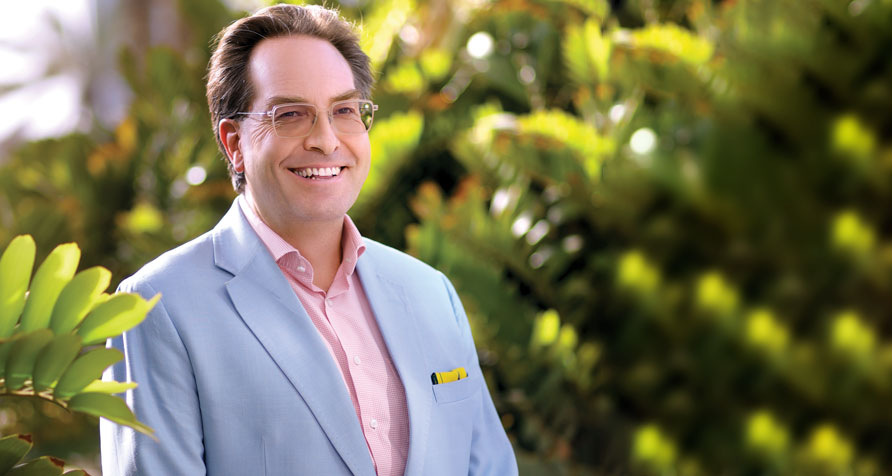
Nicholas Bonaventure, Managing Director of international architecture firm nicholas, discusses Gulf urbanism, Bahrain’s influence, British design thinking and architecture rooted in people, culture and place.
Mr. Bonaventure has built an international architecture practice with Bahrain as both a creative base and a strategic springboard. As Managing Director of nicholas, he leads a firm whose work spans the Gulf and beyond, from landmark Bahraini developments to ambitious projects in Saudi Arabia and future plans in India and Africa.
For Mr. Bonaventure, the firm’s current work reflects a wider shift in architecture across the region. The focus is no longer only on individual statement buildings, but on how people move through, gather within and emotionally connect to places.
Design Under Pressure
Among the firm’s most exciting recent projects is Daman Projects’ NJD’s Heart Tower in Riyadh, a 60-storey building being converted from apartments into offices, retail outlets, entertainment facilities, meeting venues and a hotel. It is exactly the type of challenge that appeals to nicholas.
Mr. Bonaventure says: “Working with existing buildings is always technically challenging – and we love a challenge! The best solutions often grow out of constraints.”
The project’s brief calls for ‘traditional’ Najdi architecture, which creates an unusual design question: how can a high-rise tower reflect a form of architecture not historically associated with tall buildings?
Mr. Bonaventure says: “High-rise is not a traditional building form. We have used a lot of licence to reinvent, and we really went to town on it.”
The firm is also working on retail developments in Saudi Arabia, with an emphasis on outdoor retail, walkable precincts and public realm design. In a climate as demanding as Saudi Arabia’s, this requires careful thinking around shade, landscaping, colonnades, water features and passive cooling.
He says: “Connectivity in urban developments is the future. We cannot afford to be disconnected.”
Bahrain As A Base
Bahrain has played a defining role in Mr. Bonaventure’s career and in the evolution of nicholas. His earlier work in the Kingdom included signature projects such as Durrat Al Bahrain and the Bahrain World Trade Centre, while the master plan he created for Danat Al Bahrain remains a striking example of iconic destination design.
Over time, however, his work in Bahrain has developed in a more layered direction. The emphasis today is on cultural identity, urban continuity and the spaces between buildings.
He says: “nicholas’ work now is much more about embracing tradition – for example, reimagining a Khaleeji architecture which actively promotes Bahrain and its unique culture. It’s also more engaged with urbanism and the public realm – connectivity, walkability and celebration of community.”
He sees Bahrain not only as a market, but as an environment that encourages creative and commercial growth. Its scale, openness and regional connections make it an ideal base for a firm whose work is increasingly international.
“Bahrain is a great spot to live in the Gulf because of its fantastic sense of community and island lifestyle,” he asserts. “Architecture is about people and the people here are very engaging. Bahrain is well connected and pro-business.”
With much of nicholas’ current work taking place internationally, particularly in Saudi Arabia, Bahrain remains central to the firm’s regional identity.
“We are currently harnessing Bahrain’s business energy to export design services and are developing Bahrain as a design centre of excellence for the region, from which we are exporting the best of Britain and the best of Bahrain to the world.”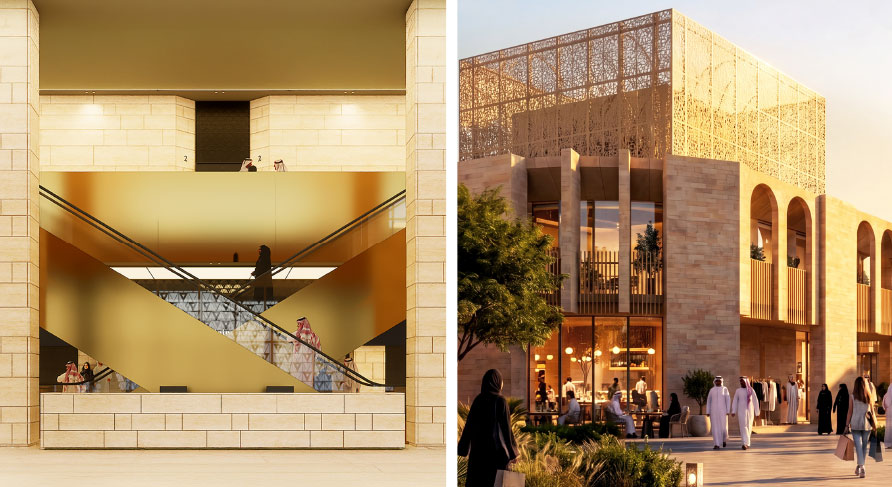
Learning From Tradition
For nicholas, contemporary design does not mean ignoring the past. Instead, Mr. Bonaventure believes that architecture should draw strength from local culture, climate and memory.
This philosophy is particularly important in a world where global cities often risk becoming visually interchangeable. For nicholas, Bahrain’s buildings and public spaces should immediately communicate a sense of place.
He argues: “In today’s ultra-connected world, where a lot of places and experiences feel the same (there is a sense, we could say, of ‘creeping global sameness’), it’s important that people and buildings feel as if they belong. People getting off a flight into Bahrain should instantly feel they are in Bahrain. That is the essence of our work currently.”
The firm designs from what he calls ‘first principles’, engaging directly with climate, culture and society rather than imposing imported solutions. By borrowing intelligently from the past, he believes architects can create places that carry meaning into the future.
The Future City
Looking ahead, the area that most excites Mr.Bonaventure is urbanism. He sees huge potential in precinct design and the reimagining of city quarters as complete destinations, particularly in Bahrain and the wider Gulf.
The future, he suggests, lies in mixed-use neighbourhoods where daily life is not built around the car. Retail, homes, offices, entertainment, education and healthcare should be connected within compact, walkable environments.
He explains: “Walkable, integrated developments are going to become huge in the Gulf over the coming years, and economic success (the entire success of cities, in fact) is going to be directly linked to our level of skill in combining multiple uses into large sites in a manner that eliminates car dependency and galvanises communities around active streets and spontaneous social interaction.”
His benchmark is clear: essential parts of life should be within a seven-minute walk. For Gulf cities that achieve this, he believes the long-term rewards will be considerable.
In 2026, nicholas will continue its work in Riyadh and Saudi Arabia’s Eastern Province, while also seeking further opportunities in Jeddah. The firm is enjoying its retail and interiors work, continuing to promote its concept of the ‘modern souq’, first developed in Bahrain.
The company’s design thinking also carries a British influence. He points to the Regency architecture of George III and George IV as a period of calm, order and purpose, but his approach is equally shaped by traditional Islamic architecture and urban form.
Mr. Bonaventure says: “Planning and placemaking must always be drawn from the climate and culture of its locale – from locus – and so I would say that both strains – the Bahraini and the British – have come to influence the way I work.”
Ultimately, his definition of good design is practical, human and rooted in experience. Architecture must serve people, improve places and create environments where communities want to spend time.
He concludes: “Architecture and urbanism are both about people, and for a project to succeed it must be people-focused, and people must love spending time there. We pride ourselves on creating exceptional projects for exceptional people, and if you believe we have done that – by designing regeneratively, by ‘making things better’ – then we have succeeded.”
Tags #btm june 2026 #modern souq design #british architecture bahrain #public realm design gulf #nicholas architecture bahrain #walkable communities gulf #urban design bahrain #bahrain architecture #gulf urbanism #architecture firm bahrain
Digital Edition
Bahrain This Month
October 2026
Related Articles
A Legacy of Giving
Mon, 05 Oct 2026
A Patient-First Future
Mon, 05 Oct 2026
Bound By Brotherhood
Fri, 04 Sep 2026
Videos