


A Life in the Ring
by: BTM - Wed, 11 Mar 2026
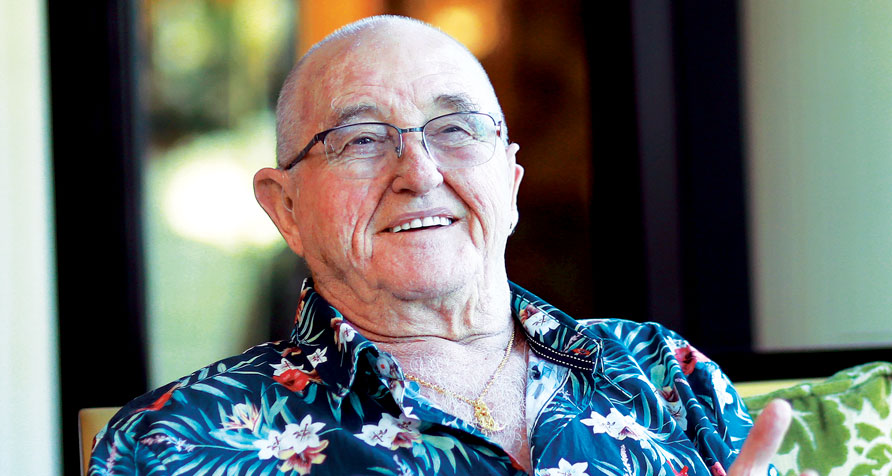
Known internationally as a dog show judge and mentor, John Wright brought decades of experience to Bahrain at a time when its show scene was still taking shape. His approach, grounded in objectivity and working-breed standards, influenced how breeds such as the Saluki are judged today.
When asked to define himself, John Wright begins at the beginning. “I was adopted,” he says simply. His birth mother was forced to give him up and he learned the truth when he was around eight, although as he puts it, “I didn’t understand it then”. He was raised by parents who were strict but steady, growing up in the Concorde factory community in Bristol, where his adopted father worked for the Bristol Aeroplane Company. “My father had a good work ethic,” Wright recalls. “He worked all his life.”
By 15, Wright had left home and gone to sea. He trained in Liverpool and spent around six years working on deep-sea vessels. Life at sea taught him self-reliance, adaptability and trust in his own judgement. It was also where he met his wife, Sylvia. “I fell in love,” he says. “And that was finished with the sea.” They married soon after and have now been together for more than six decades.
After leaving maritime life, Wright built a long career with British Telecom, starting as a telephone engineer and eventually retiring as a field manager at 50. As technology reshaped the workplace, he chose early retirement. “I’d had enough,” he says. “Computers were coming in and I knew it was time.” That decision marked the turning point that transformed dogs from a hobby into a defining chapter of his life.
His introduction to the show world came almost by accident, through his daughter’s request for a Yorkshire Terrier. At a local gala, he was persuaded to enter a small competition. “We won,” he recalls. “And that was it.” From showing, he moved into breeding and, by the mid-1970s, judging. The progression was gradual: small club shows, then open shows and, after nearly a decade, championship level.
Despite the polish often associated with dog shows, Wright is frank about their realities. “There’s no money in winning,” he says. “The money is in the breeder.” Success in the ring raises reputations and prices, which can breed politics and disappointment within the scene. He saw it often and never liked it. His advice to newcomers has always been the same: “Keep it as a hobby. Don’t take it seriously. You either win or lose, enjoy the day.”
Wright’s connection to Bahrain began in the 1970s through Hana Kanoo, a young woman who initially joined one of his specialist dog show coach tours. Over time, she became family. “She’s like my daughter,” he says. When Hana invited Wright and Sylvia to Bahrain, they had little idea how significant the visit would become. The heat was overwhelming and the trip was brief, but conversations about the local dog scene stayed with him.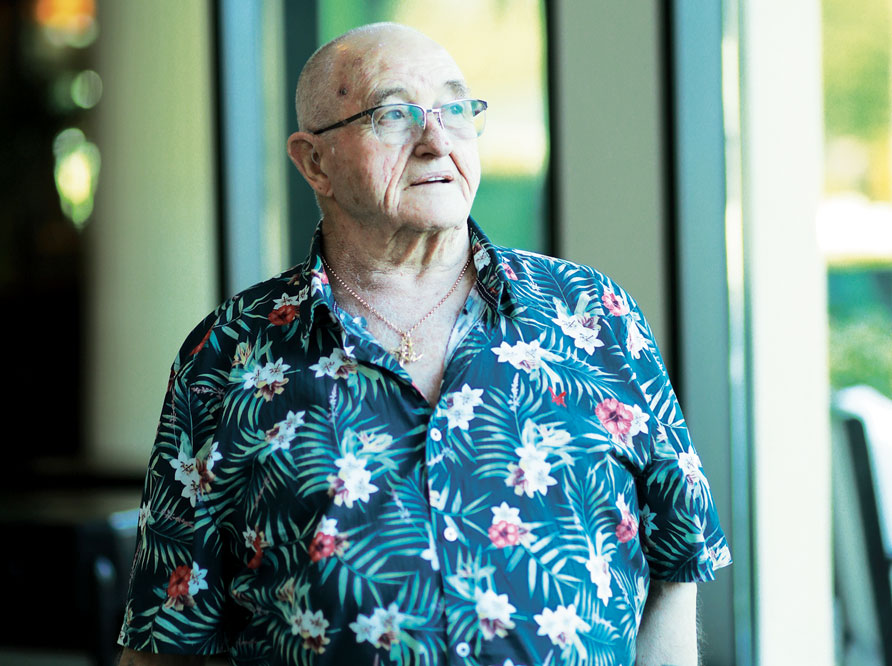
At the time, organising dog shows in Bahrain was difficult, largely due to the lack of trained judges. Wright offered to help. “If she wanted any help, I would come out and help set shows up, train judges,” he recalls. Five years later, he was returning to Bahrain twice a year, staying for weeks at a time to lecture, mentor and help establish a judging structure suited to the region rather than simply importing a British system. “We wanted it to work here,” he says. “And it did.”
Those years placed Wright at the centre of a developing show culture, particularly around indigenous and working breeds. While Salukis hold deep cultural significance in Bahrain, Wright is clear that judging must remain objective. “The culture doesn’t come into it really,” he says. “You just look at the dog.”
For Wright, a Saluki must first and foremost be fit for purpose. He looks for lung capacity, movement and strength, particularly through the hips. “The hips are the power,” he explains. Feet matter too, especially in sand, as does balance and true movement. “You can tell everything by the gait,” he says. Breed standards offer guidance, but he believes some judges rely too heavily on personal preference. “They pick one thing and keep going for it all their career,” he says. “That’s wrong.”
His understanding was shaped not only by the show ring but by seeing Salukis work in Kurdistan through his former son-in-law’s family. Watching them hunt left a lasting impression. “They were built to work, not to show,” he says. “There is a difference.”
Beyond the ring, Wright speaks warmly of Bahrain itself. “If we could afford it, we’d live here,” he says without hesitation. What stands out most is the country’s social fabric. “Bahrain’s strength is in its multiculturalism,” he says. He also points to Bahrain’s growing confidence in tourism, noting how far it has come in recent decades, while still seeing room for growth through deeper engagement with local culture and heritage.
Looking ahead, Wright hopes Bahrain’s dog show scene continues to evolve on its own terms. His ambition is simple but specific: a truly international, two-day show that reflects the country’s global character. “For a small island, they punch very big,” he says.
Asked what he hopes his work in Bahrain will leave behind, Wright does not overstate it. He trained judges, helped establish systems and returned year after year because he believed in the place. “I hope when I die, somebody will say John Wright did all right,” he says. It is a modest wish, but one that reflects a lifetime spent quietly building rather than chasing applause.
Digital Edition
Bahrain This Month
October 2026
Related Articles

A Legacy of Giving
Mon, 05 Oct 2026
A Patient-First Future
Mon, 05 Oct 2026
Bound By Brotherhood
Fri, 04 Sep 2026
Videos